Monday, April 14, 2014

The Power of Families

There are few things in this world that we have from our birth to our death. There are few things that we would sacrifice everything for. There are few things that can edify and instruct, comfort and counsel us when we are inconsolable or at a loss of where to go. But The Family is no ordinary organization.

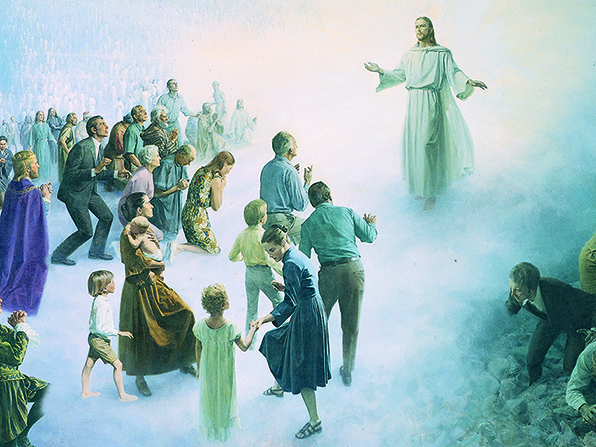
One of the first principles that we teach people as missionaries is that families are ordained of God. They are a gift from Him to bless us, to strengthen us, and to teach us. Families come in many shapes and sizes, but any family that centers itself on Jesus Christ can eventually be reunited in the eternities and receive all the blessings that God has to offer.

I don't know about you all, but when I was young, I had a hard time appreciating my family. I loved them, no doubt about it, but I couldn't comprehend a fraction of what they did for me. Maybe it's because I'd always grown up with a loving family, so I didn't recognize how important and beneficial my family was. Perhaps as a teenager I resented the "loss of freedom" that I imagined my family inflicted on my. And besides, they were so dorky! Did they really have to always embarrass me like that?

I think we all have moments when we don't give our families the credit they deserve. We get busy with careers and hobbies, we get distracted by life or fall into a rut. In short, we take them for granted. I think that I was in that state for many, many years. I simply didn't appreciate that my family was good for me! Fortunately, the Lord blessed me with some experiences that helped change my mindset.

It started on Christmas Eve, 2012. I was a Junior in High School, and enjoying a break from my busiest year of school. My mind was on my friends, on my goals for the coming Track season, and what my plans were for my remaining week and a half of freedom. But then the thought came to me: Wait. I didn't get my parents any Christmas presents. Now, I have never been a good gift giver, and up to that point it didn't really bother me. Looking back, I guess I was just selfish. (For the record, I'm still not a great gift-giver, but I am trying to improve!) This time, though, I was filled with a deep guilt. I scrambled to find something I could do in the 12 hours before our family would open our presents, but my mind was completely blank. Finally, I resorted to writing each of my parents a long letter. I don't remember much of what I wrote, but I imagine I did my best to sincerely express my gratitude for everything they'd done for me. As I wrote, though, it just felt fake. It's hard to throw something together last minute and still be sincere about it.

Christmas came, and my parents actually appreciated the letters! I was pleased that I'd made it work, but I was more grateful for the lesson that I learned. Because I realized that it wasn't just my gift giving that was poor, it was my attitude towards being a son and a brother. It wasn't until then that I realized that up to that point, I'd viewed my family as a way to get the things I wanted, instead of people that I needed to care for. I realized how selfish I'd been, only joining the family for meals and pulling the "I have homework" card anytime they wanted to spend time with me.

BUT, I didn't stop there, at the regret stage. I resolved to change. I decided that from that day forward, I would be a better son and a better brother. Now, I won't say I became a perfect family member, or even a good one, because I'm not sure how my family felt about my change (or if they even noticed it). I can say, though, that I began to sense a change in MY life.

Although there were many blessings that came as I dedicated more to my family, most of them boil down to the relationships I had with my parents and siblings. I stopped viewing them as burdens or obstacles, and started to actually get to know them better. I started developing real relationships with them, and I was amazed at the results! My love for them increased, and I started to genuinely care about them in a way I'd never experienced before. They became my best friends! I began to trust them, to love them, to appreciate them. As a result, I felt better about myself, because I was part of something larger than myself. I was no longer driven by selfish desires, but by a desire to make them happy!

Now, as a missionary, my relationship with my family has changed a lot. Our communication is limited to weekly emails, occasional snail-mail, and Skype calls twice a year. However, I still love my family more than anything, and I still feel them sustaining me in my hard times and rejoicing with me when I am successful. They motivate me in all that I do, even from hundreds of miles away. And I am still so grateful that I invested some quality time with them over the last few years, even though I wish I had started sooner.


In 1995, the leaders of the Church of Jesus Christ of Latter-Day Saints issued a statement on the role of families, called The Family: A Proclamation to the World. I would like to share a few of my favorite excerpts from that statement:

"We...solemnly proclaim that marriage between a man and a woman is ordained of God and that the family is central to the Creator’s plan for the eternal destiny of His children."

"The divine plan of happiness enables family relationships to be perpetuated beyond the grave. Sacred ordinances and covenants available in holy temples make it possible for individuals to return to the presence of God and for families to be united eternally."

"The family is ordained of God... Happiness in family life is most likely to be achieved when founded upon the teachings of the Lord Jesus Christ. Successful marriages and families are established and maintained on principles of faith, prayer, repentance, forgiveness, respect, love, compassion, work, and wholesome recreational activities."


I know that the family unit is truly ordained of God, and that He wants us to be successful and happy with our families. As we strive to bring our families closer to Jesus Christ's teachings, we can be blessed with peace, love, and strength, and eventually live together with them forever.

I'm so grateful for the blessings that God has given me, and especially for my family.

Wednesday, April 9, 2014

What To Do When People Don't Like You

This past weekend was one that I was looking forward to for a long time, and it did not disappoint! The reason that I was so excited was General Conference! General Conference is a meeting that is held every six months by the Church of Jesus Christ of Latter-Day Saints in which our leaders give us counsel and advice on how to conduct ourselves and brace for the challenges of the next six months.

The many speakers at General Conference are rarely given a specific topic to discuss, but are instead asked to pray and ponder on what the needs of the church are at that time. Despite the fact that the speakers do not correlate, there are often subtle "themes" for each conference. This conference, one of the biggest themes that I saw was Responding to Opposition. By Responding to Opposition, I mean the idea of "disagreeing without being disagreeable". Responding to Opposition means being both confident and loving when others challenge the things we believe.

Opposition has been a hallmark of Christianity and religion in general for a long time. It is becoming taboo to talk about religion in public and professional settings, and many religious principles are ridiculed in the media and in the intellectual world. This is the kind of opposition that I'm concerned about, and it is going to increase in the coming months and years. It isn't always explicit or hostile, but it is there. Even between religious sects, there are simple misunderstandings that can lead to stigmas and tension.

Now, the natural human response when people criticize our beliefs, whether religious or otherwise, is not productive. Human nature tells us to get defensive or angry, to fight back, or to label groups of people as "us" and "them", or even "friend" and "foe". We are inclined to lose our tempers, to hold ourselves aloof from any actual discussion, and sometimes to hold long and bitter grudges.

But what does that accomplish? What do we gain from that? Well, it is certainly the easiest path, in that it doesn't require us to make informed decisions about the people around us. But is the easiest path the best path?

Short answer: no.

Elder Zwick, one of the speakers at General Conference, gave an excellent talk entitled "What Are You Thinking?" In it, he gave some advice about reacting in a Christlike manner to people we may not have the kindest feelings towards. He said:

"We have seen unchecked anger erupt in public places. We have experienced it...at sporting events, in the political arena, and even in our own homes.

"All of us... have regretted jumping headlong from the high seat of self-righteous judgment and have spoken with abrasive words before we understood a situation from another’s perspective. We have all had the opportunity to learn how destructive words can take a situation from hazardous to fatal.

"There exists today a great need for men and women to cultivate respect for each other across wide distances of belief and behavior and across deep canyons of conflicting agendas. It is impossible to know all that informs our minds and hearts or even to fully understand the context for the trials and choices we each face."

In essence, Elder Zwick asked each of us, before we say something we regret, to take a moment and consider the other person's perspective. While his words were mostly in regard to our daily interactions with family and friends, they apply perfectly to the way we respond to opposition to the church as well.

So, how should we react when someone challenges the things we believe? Well, first things first, REMEMBER TO BE RESPECTFUL! If you immediately jump to the conclusion that you are under attack and that you need to shout empty rhetoric at the other person until they agree to get baptized into your church, you are taking the wrong approach.

Instead, take a minute to employ Elder Zwick's advice. Consider where the other person is coming from. Maybe they heard an inaccurate description of your views. Maybe they have had a personal experience that makes the topic they've brought up a very touchy one. Maybe they're genuinely curious about what you believe! Next, make sure you understand their concern. We've all experienced that awkward conversation where you ask a simple question and get a long-winded answer...to a different question. Make sure you know what you're saying and what they're saying. Finally, try to respond to their concern in a clear, concise fashion. If they are genuinely interested, you can go into some detail about why you believe the things you do. If you sense that the other person is just trying to pick a fight, you can give a brief statement of what you believe, then drop or change the topic as tactfully as you can. Above all, remain calm and friendly as you talk!

To demonstrate, let's look at the following conversation that I just made up in my head. I'm going to use the name "John" for us, and "McKenna" for the "questioner".  First there will be a bad example, what human nature wants us to do, then there will be a good example, of how Christ would have us react.

Bad Example:

McKenna: "So John, I heard that your church doesn't let you drink alcohol. What's up with that?"

John: "Alcohol is terrible! It's an evil, addictive drink that will ruin your life! Get away from me!" 

*John then runs away waving his hands in the air, leaving McKenna rather confused and disenfranchised*

Okay, I confess, that example may or may not have just been for fun. I hope you have never experienced anything like that.


Good Example:

McKenna: "So John, I heard that your church doesn't let you drink alcohol. What's up with that?"

John: "Well that's a good question, why do you ask?"

McKenna: "Well, at my church each week we drink a little bit of wine to remember Jesus and what He did for us, like they do in the Bible. And my parents will drink beer with their friends sometimes. It's just a social thing, there's really no harm in it."

John: "Oh, I see! Well, I know a lot of churches do the same thing you do with the wine each week. We actually do a pretty similar thing, except we use water instead of wine. The reason we don't drink alcohol, though, is because of something called the Word of Wisdom, have you heard of it?"

McKenna: "I haven't, what's that?"

John: "The Word of Wisdom is kind of like a health code that they ask us to follow. Except it's not just the church that asks us to follow it, we believe it comes from God, through a prophet named Joseph Smith. In our church, we believe that we have modern-day prophets, a lot like the prophets in the Bible."

McKenna: "Okay...I still don't see why drinking is bad, though."

John: "Well, obviously drunk driving and alcoholism are negative consequences, but there's a lot of other consequences that we don't really understand. We don't know all of the reasons why we do the things we do, but we have enough trust in God and his representatives to do the things that he asks."

McKenna: "How can you put so much trust in the leaders of your church? That seems kind of silly..."

John: "Yeah, it does kind of seem like that. But I've prayed for myself about prophets and about the Word of Wisdom, and I just feel at peace when I think about them. We don't take everything the prophets say for granted, we are encouraged to seek our own answers from God, and then follow what we feel."
McKenna: "Well that makes sense I guess. I never thought of it that way. Thanks John!"


See how John was able to turn a question into a missionary opportunity? In the first example, John assumed that McKenna was a brain-washed heathen, and they both ended up offended. In the second one, though, he took time to understand her before answering the question, and it ended up being a positive experience for both of them! Opposition doesn't have to be a negative experience!

It is a fact of religious life that we are going to meet people who deride our beliefs. However, as we respond to their questions and concerns in a respectful manner, acting in "boldness, but not overbearance" (Alma 38:12), we can strengthen our own testimonies and be an example to those around us. Please, please, please remember faith, meekness, and love as you encounter those who scoff at the things you believe.

It comes down to this: Understand your beliefs well enough to answer questions about them, and understand the beliefs of others well enough to be humble and loving when you answer their questions.

I hope that these principles help you as much as they've helped me. I've been able to maintain friendships based on mutual respect as I've tried to be humble and open-minded. Some of my most cherished friendships could have been ruined multiple times if I hadn't made an effort to be open-minded as I've answered questions, and I believe that I've helped my friends understand my views better in the process.

Please be kind! Please be loving! We cannot claim to represent the Savior if we do not follow His example of pure love and humility, even when people don't like what we believe.

Friday, April 4, 2014

Gratitude: Little Things with Big Results

One night, before I went to bed, I knelt to offer a personal prayer to God as I usually do to end the day. I was tired, and the day had been frustrating. I was ready to tell God about all the bad things that had happened to me that day, and ask Him for strength to overcome my challenges the next day. Just as I was about to begin my prayer though, I stopped. The thought came into my head: How would the Savior pray? Surely the Lord, whose every act called out "Not my will, but thine be done", would not even think of complaining to the Father.

What can I pray about, then? I asked myself. I was answered by a memory of something that another missionary shared with me. He had shared that every once in a while, it is beneficial to try to pray only in gratitude, to not ask for a single thing. So I decided to try it.

"Dear Heavenly Father," I began, "Thank you for the wonderful day that I had and the opportunities you placed before me. Thank you for the snow that we've received. Thank you that we were safe as we went through our day and that we were able to complete everything that we needed to accomplish. Thank you for my companion, for his spirituality and ability to influence those around him for good. Thank you for putting me here in this part of the world..."

It did not take long for my attitude to change. It is obvious that our thoughts direct our actions, but I'm amazed at how the reverse is sometimes true. By challenging myself to be more grateful in my prayers, I was able to change not just my words, but my way of thinking.

If I had said the prayer I originally intended to say, I would have ended the night frustrated, fatigued, and bitter. Instead, by assuming an "attitude of gratitude", I was able to fall asleep peaceful, happy, and content. It set the right tone for my next day and made a lasting impact on my effectiveness - and satisfaction - as a missionary!

What is it that makes gratitude so important? Why can such a simple thing make such a big difference in our life? While I don't have a full answer, I think that PART of the answer is that gratitude influences the way we view the world around us.


In the New Testament, the Apostle James teaches us how small things can make a big difference in our lives. While he was talking specifically about the way we speak, I think his words can apply to gratitude as well:

Behold, we put bits in the horses’ mouths, that they may obey us; and we turn about their whole body.
Behold also the ships, which though they be so great, and are driven of fierce winds, yet are they turned about with a very small helm, whithersoever the governor listeth.


So how does gratitude "turn about" our view of the world? Here are a few ways:

Increases our Charity:

Charity is defined as "the pure love of Christ" (Moroni 7:47). To many people, charity is simply money that we give to the needy. It can be so much more than that! It is something we feel towards the people around us that is manifest in the things we do and the words we say. 

When we go out of our way to be grateful, and EXPRESS that gratitude, it helps us appreciate others more, and can improve our relationships with those we care about. When we try to be grateful towards God, we begin to view the people around us as blessings, rather than burdens, and our actions towards them will change accordingly.

Decreases our Pride:

When I say pride, I don't mean school spirit or our loyalty to your government. I mean the feeling that we are better than others, that we don't need help, or even that we don't have to listen to God. It is the pride spoken of in the scriptures that led people to ignore the prophets and often resulted in complete destruction.

Gratitude helps strip us of pride. It takes us out of the "me" mindset, and helps us reject the notion that we deserve more, that we're held back by our circumstances. It allows us to humbly thank God for the blessings we do have, instead of demanding more. It can also help us see the good in others instead of focusing on the bad and trying to elevate ourselves.

Builds Self-Esteem:

Now, some of you are probably saying "Wait! How can gratitude decrease pride and increase self-esteem? Well, hold your horses, I was getting to that.

Part of my frustration when I first began to pray in the story above was a feeling that people didn't value or appreciate me. Paradoxically, I felt worthless and undervalued at the same time - I had too much pride and a low self-esteem at the same time. However, when I began to count my blessings, I realized that even if other people didn't value me, and they did, I was still loved by God. Why else would He give me so many opportunities and blessings? As we are grateful, we begin to "collect" evidence of God's love for us, which helps us feel valued and important.

Improves Satisfaction:

In this month's Ensign, a magazine published by the LDS church, there is a wonderful article on "Lasting Happiness". It describes the way having "things" doesn't make us happy. It sites both religious doctrine and scientific studies to show that we get pleasure from the necessities of life, not from the luxuries. "Lasting happiness" is something we chose to feel, and that's what I mean by satisfaction.

When we stop looking at the things we DON'T have, we're able to spend more time appreciating the things we DO have. Looking at what we want makes us feel upset, stressed, ashamed, fearful, discouraged, and fatigued. Looking at what we have (or being grateful) makes us feel content, happy, optimistic, and just all-around good.


So, obviously being grateful has a LOT of benefits. Why is it so hard then? Well, human nature wants us to feel victimized or slighted, and it leads us to always strive for more "things". In order to step out of that mindset, we need to take a step back and count our blessings, in one way or another. Like I did, you can say a prayer of gratitude. You can also keep a notepad with you, and list the good things that happen to you each day. You can pick a person that you're close to, and list all of the things you like about them. You can even sit down and force yourself to write out 50 or 100 or 500 blessings you have in your life! Whatever the method you use, it is important to be sincere, but have fun as well! Appreciate the little things.

I know that God has blessed us with everything we have in this life, including each breath we take. He loves us so much, and the least we can do is acknowledge all that He's given us. The world is a beautiful place!


So, sit back and smell the roses. Watch the sunset. Kiss your spouse. Savor your favorite meal. Look for good in every moment, and you will find it.

Please, leave a comment and share what some of the greatest blessings are in your life!

Tuesday, April 1, 2014

How Can You Be Sure?

Recently I was talking to one of my friends from back home over Facebook. This friend is a member of the church, but is struggling somewhat with her testimony. She is going through a time in her life that ALL church members go through, where she is figuring out for herself what she believes.

During the course of our conversation, she asked me "How did you know that this was the true church? How can you be sure?"

How can you be sure?

That question, that deep, probing question, is one that every religious man or woman must be prepared to answer. How can we "stand as witnesses of God at all times and in all things, and in all places" (Mosiah 18:9) if we don't even know HOW we know that God exists?

Well, I am a firm believer that each of us needs to find that answer for ourselves. We all have a unique path to walk that leads to a sure knowledge of God. I hope, though, that by sharing how I came to MY answer, that YOU will be able to get to YOURS. 

C. S. Lewis once said that "Christianity, if false, is of no importance, and if true, of infinite importance. The only thing it cannot be is moderately important." In that spirit, I'd like to invite anyone and everyone that DOESN'T know yet if God is real or what they believe about Him to take the time to ponder and come to their own conclusion. I would invite them to follow the same steps that I took in coming to know God.

So without further ado, because there's been plenty of that already, I'd like to outline the steps that I took to learn for myself that God is real, that the Book of Mormon is true, and that the Church of Jesus Christ of Latter-Day Saints is God's true church on the earth today.

1. Gain Information:

This first step seems simple, but it is of vital importance. It is also a continuous process that lasts a lifetime. For me, this information mostly came from my parents and from church. As I grew up going to Sunday School and listened to the stories about Jesus, I was able to develop a foundation of knowledge of what the church believed. This knowledge was augmented at home as we read from the scriptures as a family and my parents taught me lessons about what was right and wrong. So, almost from my infancy, I had three vital, and connected, pools of information: 1) The basic beliefs of the church, 2) A familiarity of the scriptures, and 3) A clear understanding of what was morally right and wrong.


2. Acknowledge Other Opinions:

This step, too, seems obvious and maybe it is for most people. Like the first step, though, it is a continuous process that we always need to keep in the back of our mind. We NEED to know that there are people in the world, a LOT of people, that don't believe the things that we believe. I distinctly remember the moments in elementary school when I first found out that not all people go to my same church, not all people hold the moral standards that my parents taught me, and that not all people even believe in God. Each one was a shock to me, but were obviously necessary steps in my development. We cannot know that WE believe in God, without also knowing that OTHER people DON'T believe in God. In addition, we can't really be kind, loving, productive members of society without understanding and accepting the beliefs of those around us.

3. Test the Waters:

For me, testing the waters mostly meant deciding if the rules that I learned at church were actually good for me. It may take different forms for different people, but for me it went something like this: "I've been taught that I shouldn't say mean things about people, and I try not to. But does that actually make sense? Well, one time I DID say something mean about someone and they found out, and then I wasn't happy. And when people say mean things about ME I feel sad...yeah, that makes sense. I probably shouldn't say mean things about people." The process may seem juvenile, but hey, I went through this between the ages of 8 and 12 for dozens of principles. And it worked! Over time, I became committed to the individual commandments that we as members of the church are asked to obey. It wasn't just because that's what I'd been taught anymore, it was now because that's what I believed. That's what I knew. For myself.

4. Become Familiar with the Holy Ghost:

One of the basic ideas of our religion is that as we follow God's commandments, we are eligible to receive and feel the Holy Ghost. Different Christian religions have different ideas about the Holy Ghost, but I'm not going to go into that right now. However, you can read our beliefs here. Long story short, the more we keep the commandments of God, the more receptive we are to spiritual experiences and revelations. As I became committed to obeying God's commands, I began to have my prayers answered in more profound ways, I began to have deeper insights when I went to church, and I began to feel contentment and peace in my life. Granted, I was only 12 or 13 at this point, so what did "contentment" really mean? But to me, young as I was, it was a sign of progress.


5. Search With Real Intent: 

This step is really a tipping point, and most of the people I've taught on my mission have already been at this stage in their spiritual journey when I first met them. 
To "Search With Real Intent" means to do everything in your power to find answers for yourself. The Lord has mercifully given us some tips on how best to do this in the last chapter of the Book of Mormon:

"Behold, I would exhort you that when ye shall read these things, if it be wisdom in God that ye should read them, that ye would remember how merciful the Lord hath been unto the children of men, from the creation of Adam even down until the time that ye shall receive these things, and ponder it in your hearts.

"And when ye shall receive these things, I would exhort you that ye would ask God, the Eternal Father, in the name of Christ, if these things are not true; and if ye shall ask with a sincere heart, with real intent, having faith in Christ, he will manifest the truth of it unto you, by the power of the Holy Ghost."


In other words, read the scriptures and pray about them. This passage talks specifically about finding out if the Book of Mormon is true, but I believe it applies for any spiritual answer we are trying to obtain. But again, I'd like to emphasize the REAL INTENT part of it. God has PROMISED us that we can know for ourselves, but we have to want it. We have to really want to know if God lives, if the Book of Mormon is true, or whatever it is that we are asking God.

6. Recognize the Answers:

This is where I've seen some people get hung up, especially lifelong members of the church who claim to not believe it anymore. Unfortunately, in our culture we often wait for big, dramatic answers to our questions to God. This is not the way God works. He teaches us "line upon line, precept upon precept". The knowledge and faith that we've been discussing comes slowly, bit by bit, over a long period of time. In fact, I would hope that it continues to grow throughout our mortal lives. I can only speak as an almost-nineteen-year-old, but I know that so far my faith has only increased from year to year as I've lived the gospel.

Oftentimes, we cannot recognize the answers God is giving us until after the fact. We look back and see the blessings that have come, the things that we've felt, and the decisions we've made. There may be many facets of "our answer", and we can't see them when they're happening. So, if on your spiritual journey you feel that you have been patient for long enough and haven't yet received your answer, you may have to take a step back and look at the previous days, weeks, months, or even years, and look for your answer in the details of your life.

For me, it came one day as I was reading the scriptures. I was reading some of the prophecies about our day that are contained in the Book of Mormon. I was probably 13 years old. I was suddenly struck by the realization that I was no longer just reading a book, I was reading scripture. I realized that I had already put my full trust in the book I held in my hands. I immediately knelt and prayed, and essentially asked God if I had received my answer. A calm, peaceful feeling of love filled my heart, and I knew that I had. I knew that God was real, that the Book of Mormon was true, and that the LDS Church was Christ's true church.

7: Repeat as Needed:

Even after that experience, there have been many times when I've been led to doubt what I believed. Circumstances, experiences, and new information have always kept me on my toes. This is part of God's plan though. I mentioned that the first few steps were continuous processes, and in a way all 6 steps are the same way. God asks that once we know for ourselves what we believe, that we keep doing the things that got us to that point. That way, when we are led to doubt our testimony, our testimony only gets stronger in the long run. It continues to become wider - to cover more principles of the gospel - and deeper - to give us more strength in times of trouble. It becomes a priceless treasure that cannot be taken away.


I would like to again invite everyone to find out for themselves what they believe. If you aren't LDS, that's okay. Find out for yourself IF you believe in God, and WHY you believe in God. If you want to know, turn to God, and He will show you the way.

If you know anyone who would benefit from hearing my experiences, I'd encourage you to share this with them. In addition, I'd ask that you share YOUR experiences with them. If you feel comfortable, please post in the comments how you learned for yourself what you believe.

Friday, March 28, 2014

Why Should I Change?

I'm going to start this post by talking about my eyebrows. Yes, you read that correctly--my eyebrows. And this is why: they don't move enough. For some reason, when I talk, my eyebrows would rather sit like a bump on a log than move up, down, in, and out to show emotion, interest, and energy. I'm not quite sure why, that's just what they do.

This problem was first brought to my attention by my awesome companion, Elder Ellsworth (side note, he has a great blog that you can view here). Apparently, the reason so many of my jokes have been falling flat all these years is that my eyebrows didn't move! Imagine that! 

So, the wonderful Elder Ellsworth invited me to do something: he invited me to change. He has been coaching me in the last week or so by adding the word "eyebrows" to the ends of my sentences and giving me examples of good facial expressions. At first it was a little bit aggravating, because change is not easy. But I'm SLOWLY getting to the point where I don't need to think about it anymore, my eyebrows move on their own!

As missionaries, our role is to invite the people we meet and teach to make changes in their lives that will bring them closer to the Savior. Often times these changes are not easy, and they sometimes don't make a whole lot of sense. Many religions teach that we don't need to change our lifestyles, we only need to declare faith in Jesus Christ. From time to time the people we teach are confused about why they are being asked to change themselves.

So, after thinking about it, I'd like to share some thoughts about WHY we, as disciples of Jesus Christ, are asked to change our lifestyles.

It all starts with our purpose in life. I think the Book of Mormon character Amulek describes it best, in Alma 34:32:

"For behold, this life is the time for men to prepare to meet God; yea, behold the day of this life is the day for men to perform their labors."

This life is the time to prepare. This life is when we must perform our labors. What does that mean? How can we, imperfect mortal human beings, prepare to meet God, the perfect, eternal creator of the universe? How can we possibly be prepared for such a task? What does that even entail?

Well, although Christian religions differ in the specifics of the doctrine, almost all agree that, at some point after we die, we will all be held accountable before God. According to the Mormon tradition, we will be judged according to our "thoughts, actions, and desires". So what can we do to make sure that when we report to our Maker on ALL of our thoughts, actions, and desires, we won't be shaking in our boots and quivering in guilt?


Well, we can change. We use the word "repent". To repent means to feel sorry for our mistakes, correct our habits, and realign our will with God's will. God has repeatedly given us the AMAZING promise, throughout the Bible and the Book of Mormon, that if we repent of our sins, we will no longer be held accountable for them. They are wiped away, we are forgiven. It is one of the greatest blessings God has given to His children.

But why does God care what we do in this life? If He loves us, why can't He accept us the way we are? That is a good question. It has to do with the nature of God's commandments. The thing that is sometimes hard to realize is that God doesn't give us commandments just to make our lives harder. He isn't trying to STOP His children from making it to heaven by telling us what we should and shouldn't do. The commandments are there... TO MAKE US HAPPY! In my first post, I talked about how keeping the commandments leads us to a happier life. It isn't that God is rewarding us for keeping an arbitrary list of do's and don'ts. The commandments DIRECTLY affect our quality of life, the peace in our families, and our feelings of self-worth. Pretty neat, huh?

So why do you need to change your life because of the gospel? Well, you don't. But God has given you commandments, commandments meant to bless and enrich your life, and if you don't try to live them, you won't qualify to live with Him in Heaven. Notice that I said TRY. Because God is merciful, and knows that sometimes we don't succeed. But He wants us to do our very best.


I have gained a greater love for and appreciation of the rules that God has given us as I've lived them myself and taught them to those around me. I hope that my thoughts have made sense and that they have helped explain why the Lord sometimes asks us to make changes in our lives. 


I would like to invite all of you, no matter what your religious affiliation might be, to study the teachings of Christ in the New Testament and the Book of Mormon. Then seek to live your life in accordance with those teachings. Love your neighbor, live a clean and virtuous life, pay respect to God through prayer, and try to serve those around you. You will be blessed by your obedience to God, and then over time you will know for yourself that the teachings of Jesus Christ are true.


How has living the commandments blessed you in your life? 
Let me know in the comments!